Build a consistent intake record
Capture vehicle details, the reported concern and relevant service history. Define how records are matched to an existing customer. Duplicate customers and incomplete vehicle information make downstream estimates and follow-up harder to trust.
Connect inspection to authorization
Link proposed labor and parts to documented findings. Present the scope, assumptions and price for customer review before work begins. AI may help summarize notes or prepare wording, but technicians and advisors validate the diagnosis and estimate.
Keep the sales and service picture connected
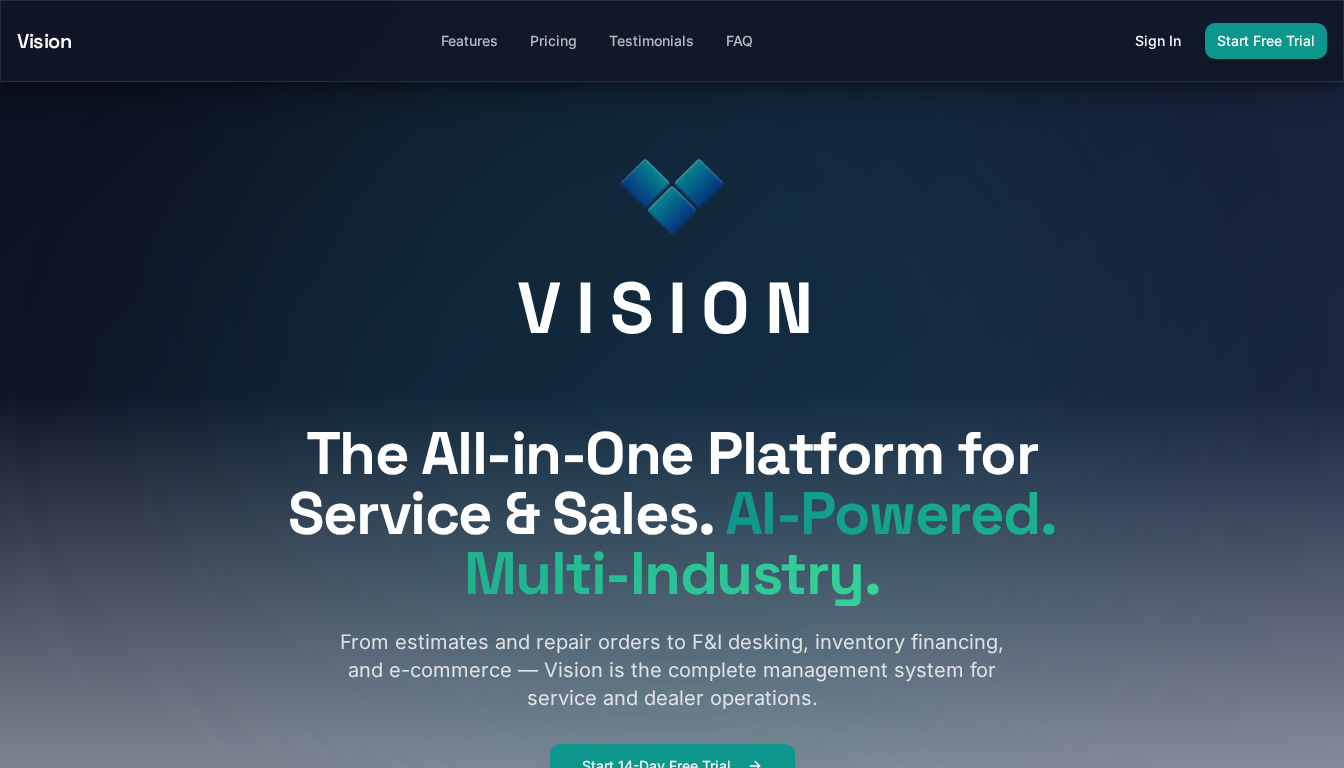
Vision's published profile describes service and sales management for automotive and other vehicle/equipment businesses. Assess its fit against your actual operating requirements rather than assuming it replaces every feature of an existing dealer management system.
Integrate without losing the source of truth
Customer records, accounting and parts data may live in different systems. Confirm supported interfaces and assign ownership for each field. Use validation and duplicate protection for updates, and preserve a review path when a connected system is unavailable.
Launch with explicit quality checks
Review cases involving changed scope, missing information and customer declines. Define success as correct records and usable handoffs; speed alone is not sufficient.
- Map intake through completed repair
- Identify the authoritative customer record
- Set approval rules for estimates and messages
- Test failures and duplicate requests
Related portfolio work
Project profiles describe individual offerings and work examples. Confirm the fit, integrations and scope for your operation.
ViZion
Vision brings AI-assisted service management and sales tracking into one workspace for automotive, RV, marine and equipment teams.
Define your first connected workflow
Tell us what is slowing the team down and which tools you already use.
Discuss your project