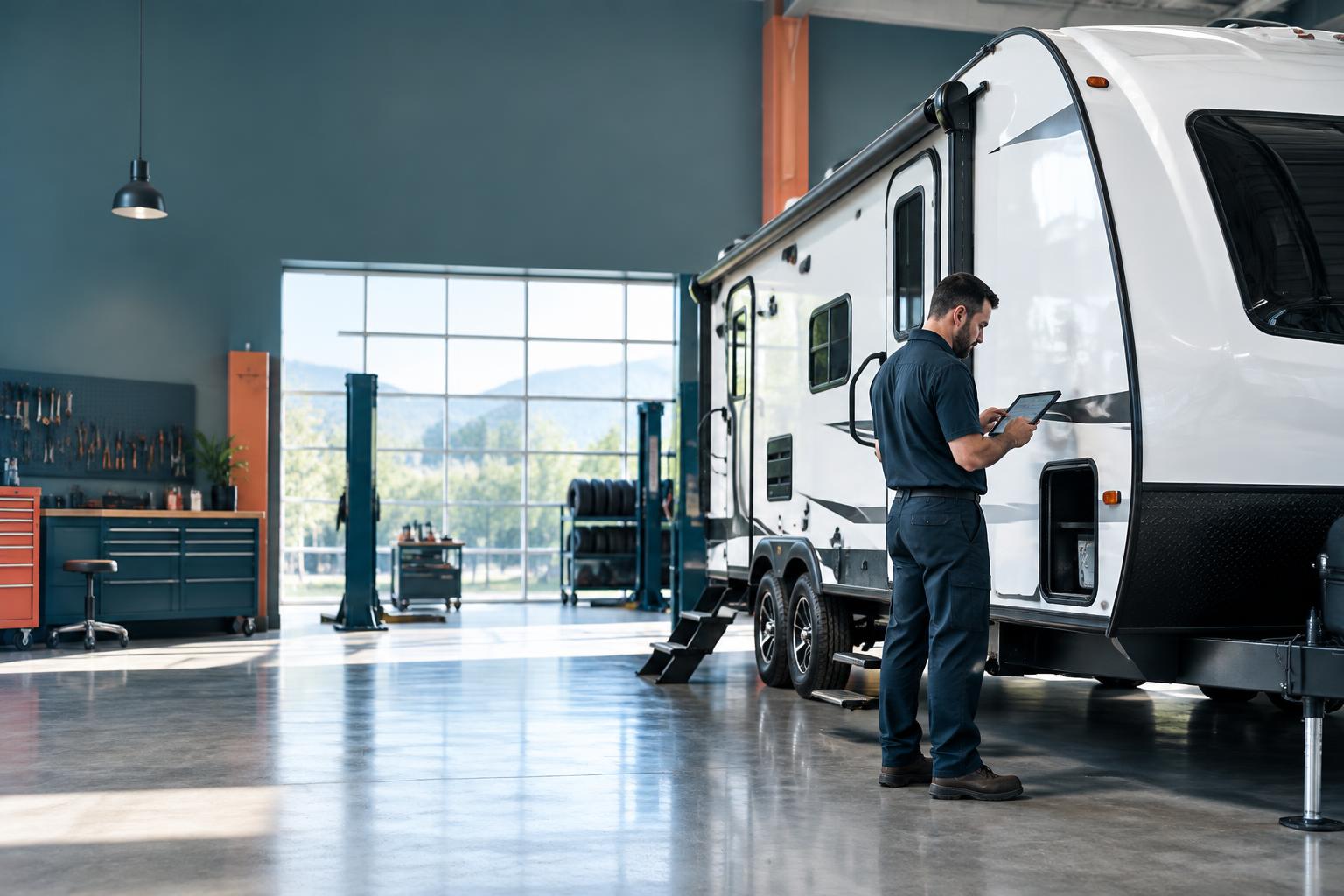
Editorial illustration of a technician using a tablet beside an RV in a service workshop

AI Agents, Automation & Custom Software Built for Real-World Operations

AgenticApplied builds autonomous AI agents, AI automation, predictive analytics, and custom software development for RV dealers, marine, auto, diesel, HVAC, and field service operations—from dealer management software to warranty processing automation.

Business technology.
Connected to the work.

AgenticApplied builds AI agents, AI automation, custom software development, RV dealer software and field service AI that connect requests, records and decisions. We start with the operating process—service bay, sales desk, warranty office—define the right scope, and keep people in control of the actions that matter.

Selected work

Dealer software, estimates & warranty operations

Focused offerings for the service bay and back office. Explore what each brings together—and where human expertise remains essential.

All projects

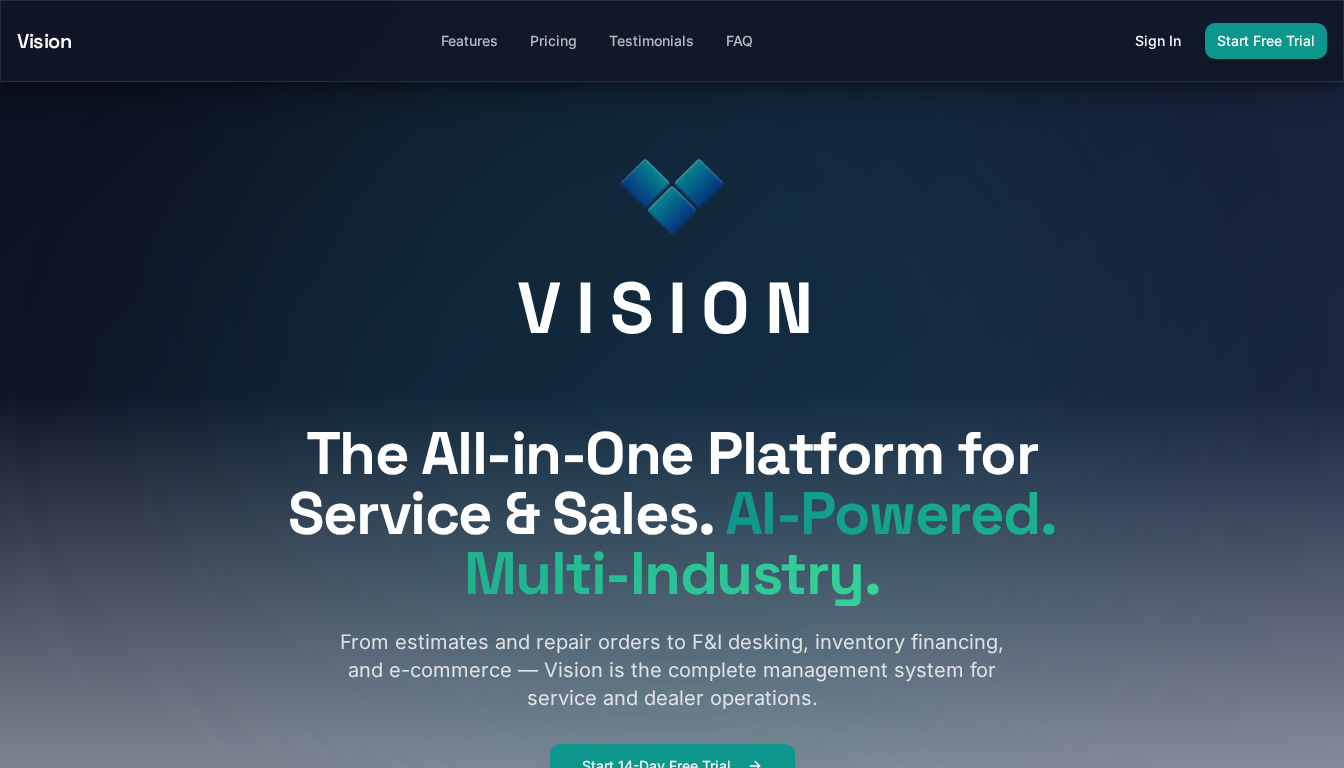
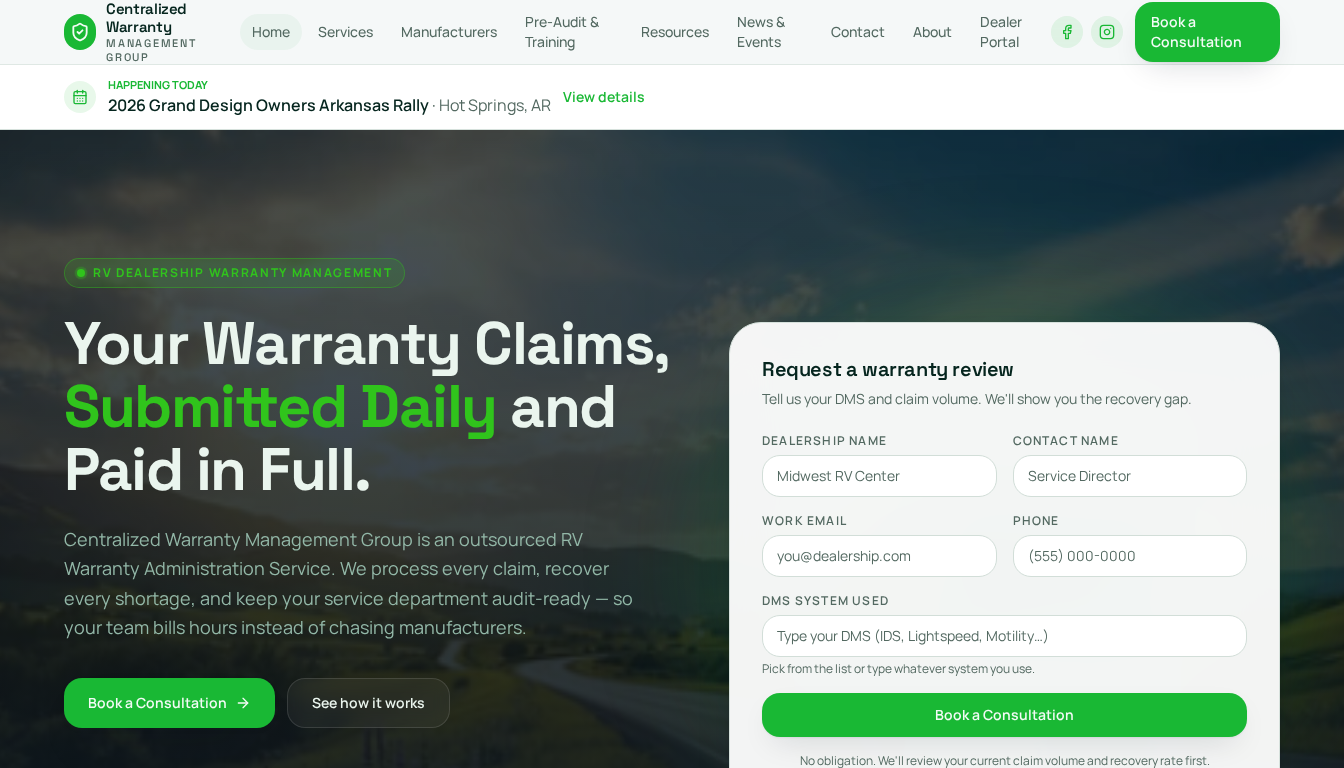
Project visuals include website previews and editorial illustrations. Concept images are not live application screenshots.

Industry guides

AI agents & software for RV, marine, auto and HVAC service

How RV dealer software, field service AI, warranty processing automation and predictive analytics apply to each operation—intake, estimates, approvals and follow-up.

AI agents & RV dealer software for RV dealerships

RV dealerships run sales, service, parts, inspections and warranty administration around the same customer and the same unit, yet those departments often work in separate dealer management software, spreadsheets and manufacturer portals. The result is retyped VINs, lost technician notes, estimates waiting on approvals and warranty claims that stall because one photo or one signature is missing.

A connected RV dealer software workflow starts at intake: the customer, unit, complaint and service history are captured once. Inspection findings flow into an estimate, the estimate into customer authorization, and the completed repair order into billing and, where applicable, a warranty claim packet. Each stage has a clear owner and a visible status so the service bay, sales desk and warranty office see the same picture.

AI agents automate the paperwork inside that chain. An agent can triage incoming service requests, structure technician notes, draft estimates for advisor review, check warranty documentation for completeness and remind staff about claims that need follow-up. Warranty processing automation assembles evidence; manufacturer rules and reimbursement decisions remain with your team or with CWMG, our outsourced RV warranty administration service.

Integration with existing dealer management software, inventory and CRM systems depends on the access each vendor supports. We map which system owns each record and start with one supported exchange. Vision brings RV service and sales management into one workspace, and custom software development fills the gaps where off-the-shelf tools do not fit how your dealership operates.

Implementation checklist

Field service AI & software for marine service

Marine service departments juggle vessel identifiers, engine and equipment details, seasonal demand spikes and work split between the shop and the marina. Incomplete intake and unclear repair scope lead to repeat calls, delayed approvals and estimates customers struggle to understand.

A strong marine service workflow captures vessel and equipment information with the customer's actual concern, turns inspection findings into a reviewable estimate with labor, materials and assumptions, and carries the approved scope, photos and notes between advisors and technicians in one shared job record.

Field service AI handles the administrative load: AI agents summarize technician notes, flag missing equipment details, draft estimates in VCM Service Estimator for review and prepare customer-ready explanations. People stay responsible for diagnosis, pricing and authorization, while AI automation removes the retyping between intake, estimating and follow-up.

Predictive analytics can forecast seasonal service demand and workload from consistent historical bookings, helping managers staff technicians and order parts ahead of the rush. We validate each forecast against real outcomes before anyone relies on it.

Implementation checklist

AI automation & dealer management software for auto service

Auto service shops and dealership service lanes depend on a clean chain from the customer's concern to inspection findings, an approved estimate and a completed repair order. Duplicate customer records, missing vehicle details and approvals tracked by phone or sticky note break that chain and slow the service bay.

The workflow we build connects intake, multi-point inspection, estimate, customer authorization, repair status and invoicing. Sales and service share customer context, so a service visit can become a sales opportunity and a sale can schedule its first service without re-entering data in the dealer management software.

AI agents work inside that flow: they classify incoming requests, prepare intake drafts, summarize technician findings, draft estimate wording and queue follow-up messages for advisor approval. Service bay automation keeps every job's status visible, and workflow orchestration makes sure nothing moves forward without the required approval.

Vision provides service and sales management for automotive and other vehicle businesses, and custom software development connects it to the accounting, parts and CRM systems you already use—with validation and duplicate protection so the authoritative record stays correct.

Implementation checklist

Field service AI & predictive analytics for HVAC service

HVAC service teams need consistent equipment information, fast and accurate estimates, and reliable office-to-field handoffs—often during peak-season surges when every hour of technician time matters. Inconsistent field notes and slow estimates cost both revenue and customer trust.

A connected HVAC workflow records equipment identifiers and observed symptoms, turns verified findings into an estimate, captures customer approval and carries the approved scope to the technician in the field. Scope changes follow a defined approval path instead of a phone call nobody logged.

Field service AI structures technician notes, drafts estimates in VCM Service Estimator for review, and prepares follow-up and maintenance reminders. AI agents handle the multi-step administrative work while qualified technicians remain responsible for diagnosis and pricing.

Predictive analytics forecasts service demand and seasonal workload from historical bookings, and—when operating or sensor data exists—can support equipment-maintenance planning. We start with the data you actually have and validate models against real outcomes, so forecasts inform decisions instead of making promises.

Implementation checklist

AI Agent Documentation

Autonomous does not mean unchecked

How autonomous AI agents think, reason, act inside workflows, integrate with dealer systems and automate multi-step operations—without giving up human control.

How AI agents think

An AI agent starts with a defined goal, a set of permitted tools and the authorized context for the job—customer history, unit details, service policy or warranty requirements. It treats incoming emails, documents and messages as data to analyze, not as instructions that can change its permissions.

How AI agents reason

The agent breaks the goal into steps, compares the evidence against the rules of the workflow and selects the next permitted action. When information is incomplete or conflicting—a missing VIN, an unclear complaint, an unsupported claim—it asks for the missing detail or escalates to a person rather than inventing an answer.

How AI agents act inside workflows

Agents act through narrowly scoped tools: read a record, draft an estimate, prepare a claim packet, schedule a follow-up. Low-risk steps can run automatically; estimates, customer messages and financial actions pause for approval. Every action is validated, logged and read back from the system of record before it is reported as done.

How AI agents integrate with dealer systems

Integration with dealer management software, CRMs, accounting, inventory and manufacturer portals depends on the access each vendor supports—APIs, exports or approved connectors. We map which system owns each record, what the agent may read or change, and how duplicate updates and failures are handled before anything goes live.

How AI agents automate multi-step operations

Real operations are chains, not single tasks. An AI agent can carry a job from service request to triage, estimate draft, customer authorization, technician assignment, warranty documentation and follow-up—handing each step to the right tool or person. Workflow orchestration tracks state between steps, retries safely, pauses at approval gates and reports exactly where a job stands, so AI automation removes retyping and waiting without removing accountability.

Read the documentation

A practical AI glossary

AI agents
Software that takes a business goal, reads authorized records and uses permitted tools to complete bounded tasks—such as triaging a service request or drafting a warranty claim packet—with human approval where the risk warrants it.
Automation workflows
Repeatable sequences of steps—intake, estimate, approval, repair, invoice, follow-up—where AI automation and rules move work forward so staff stop retyping data between systems.
Predictive analytics
Statistical and machine-learning models that use historical bookings, repair orders and sales data to forecast service demand, workload, parts needs and customer follow-up timing.
Autonomous reasoning
An AI agent's ability to interpret unstructured input, weigh permitted next steps and choose an action inside defined limits—then stop and escalate when evidence is missing instead of guessing.
Custom platforms
Purpose-built software, portals and dealer management software designed around how a dealership or service business actually operates, connected to the systems it already uses.
Service bay automation
Using AI agents and connected workflows to capture concerns, structure technician notes, prepare estimates, track authorizations and keep service bay status visible from intake to delivery.
Workflow orchestration
Coordinating AI agents, business rules, approvals and connected systems so each step of a multi-step operation—intake, estimate, authorization, repair, claim, invoice—runs in the right order, with the right owner, and stops for review when it should.
All AI terms

See the work. Understand the approach.

Explore project context and practical notes before deciding what fits your business.

Selected work & case studies →
All field notes →

FAQ: AI agents, automation & dealer software

An AI agent is software that uses a goal, relevant information and permitted tools to carry out a task. In business, that might mean reviewing a service request, drafting a response or preparing an update to a customer record. Its scope, permissions and approval rules determine what it can actually do.

Ordinary automation follows predefined rules, such as sending a reminder when an invoice becomes overdue. AI agents can interpret less structured inputs and choose among permitted next steps. Both are useful: predictable rules handle routine transitions, while AI helps with documents, language and decisions that require context.

Useful starting points include request triage, document preparation, estimate drafting, record reconciliation and follow-up reminders. Start with a bounded workflow, reliable inputs and a measurable outcome. Tasks involving financial commitments, sensitive data or uncertain judgment should include human approval.

AI integration depends on the access your existing systems provide: supported APIs, exports, permissions and vendor terms. We assess those constraints before defining an integration. Connecting systems should preserve the authoritative record and avoid duplicate updates; compatibility is confirmed for each engagement, not assumed.

RV dealer software can organize customer records, sales follow-up, service orders, inspections and warranty documentation. The right scope depends on the dealership's existing tools and departments. Vision addresses service and sales management, while the portfolio also includes focused inspection and warranty-related work.

Warranty processing automation can support document collection, completeness checks, status tracking and follow-up. Manufacturer requirements and authorization decisions still need appropriate review. CWMG is an outsourced RV warranty administration service, not a promise of autonomous claim approval or guaranteed reimbursement.

Field service AI can help turn job notes into structured service records, summarize findings and prepare estimate drafts for review. Mobile workflows must account for connectivity, equipment details and customer approval. A technician remains responsible for validating the diagnosis, proposed work and pricing.

Predictive analytics uses historical data to estimate future outcomes such as demand, workload or inventory needs. It is useful when enough relevant, consistent data exists and a forecast can inform a real decision. Models should be compared with a simple baseline and checked for errors; forecasts are not guarantees.

An agent should have only the data and tools needed for its assigned job. Approval gates can require a person to review an estimate, message or record change before execution. Logging, validation and a clear stop-and-escalate path make it possible to investigate failures and keep people accountable.

Start with the process that is not working, the people involved and the systems already in use. We help define a practical first release, integration requirements and acceptance checks. Use the project inquiry form to describe your operation and the outcome you need; scope and pricing are established for the engagement.

Let's build something useful

Tell us what isn't working.
Let's define what should.

Bring the process, the systems and the outcome you need. We'll start there.

Discuss your project