
Record the equipment and the observed problem
Capture equipment identifiers, observed symptoms and relevant service history. Keep observations distinct from diagnosis. A field service AI assistant can structure technician notes, but should not invent equipment specifications or substitute for a qualified assessment.
Create estimates from verified inputs
VCM Service Estimator's published profile includes HVAC service workflows. Review labor, materials, rates and assumptions before sharing an estimate. If pricing depends on a parts or price-book connection, confirm that capability and access first.
Make customer decisions visible to the team
Carry the approved scope and supporting notes from the office to the technician. Define who can change a job and how scope changes are approved. Mobile access, dispatch rules and accounting integration are requirements to evaluate—not features to assume.
Know when predictive analytics is justified
Demand forecasting can use consistent historical bookings and seasonal information. Equipment-failure prediction may require operating or sensor data and a validated model. Without those inputs, basic reporting and reminders are a more defensible starting point than claims of predictive maintenance.
Improve one workflow at a time
Start with intake completeness, estimate turnaround or a follow-up bottleneck. Compare results against a baseline and review errors with the people doing the work.
- Standardize equipment and job fields
- Verify estimate inputs and approvals
- Check mobile and system access
- Validate any forecast against historical outcomes
Related portfolio work
Project profiles describe individual offerings and work examples. Confirm the fit, integrations and scope for your operation.
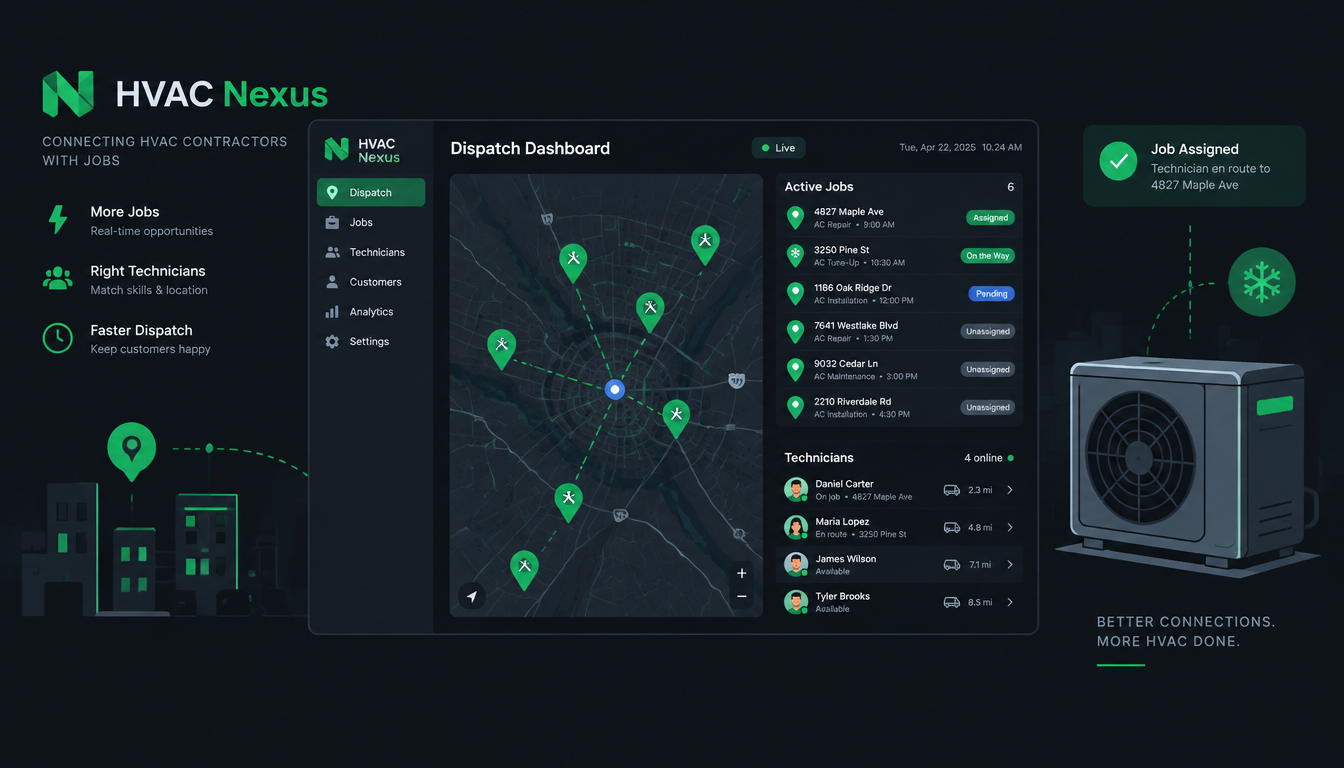
HVAC Nexus
An HVAC field-service operating concept bringing dispatch, work orders and equipment history into context.
Define your first connected workflow
Tell us what is slowing the team down and which tools you already use.
Discuss your project